Sunday, May 11, 2014

The Spring Planting Festival

This weekend marks the last frost date for Provo.  All over the city gardeners are setting out there sun loving summer crops and celebrating the official start to the season.

Fittingly, today was the spring planting festival.  There were plant starts for sale, free gardening classes, and sheer delight.

I've heard that the good plant starts go really quickly at these things, so Josh and I were sure to get there right at 10 AM, when it opened. Unfortunately, it was clear that we had gotten there a little early, because there were only one or two vendors set up and only a few more shuffling in. 

We decided to have a look around anyways, because heirloom strawberry varieties had been specifically advertised, and I was really eager to get a couple of those.

I was feeling really nervous about being there, and it took me a moment to figure out why.

I want to get into this community.  I want to go to farmers markets, plant swaps, and gardening classes.  Eventually, I want to be a major contributor to these events.  So in a sense, this felt like I was finally coming out into my society,  "look at me plant people! I'm here, we can be friends now!"

Realizing this didn't make me feel any less awkward, of course.  There's just something inherently nerve-wracking about trying to decide if a bunch of green onions is worth three dollars when the man who grew them is standing right next to you.  I hope I will become more acclimated to the situation as time goes on. 

There were no strawberry starts so Josh and I decided to come back a little later.

I did buy the green onions as well as a little chamomile plant.*  


We came back to attend the beekeeping class, which turned out to be disorganized and bumbly,  but still entertaining. I noticed that they were filming the lecture, so I'm going to try to get ahold of some of the recordings to watch the other classes.

There still weren't any strawberry starts.  Maybe they came and left while we were gone.**

Overall, the spring planting festival was fun, but a little dinky compared to what I was hoping for.  I ended up having to go to a commercial nursery for everything I was actually planning on getting.

On the bright side, I learned that there's a Utah seed exchange group. I also learned that there's a small permaculture based farm up in Orem that gives tours every Thursday.

Date night anyone? 

*I'm suddenly fostering hopes of growing enough to make tea.
**or maybe whoever brought them last time decided they would rather have another table with nothing but tomato plants. 

Thursday, May 1, 2014

Gardening Books that Have Changed Me

I know I've mentioned my life plans on this blog before, but it bears mentioning again.   I want to have a homestead where I keep chickens, bees, and maybe sheep.  I want to produce a wide range of perennial fruits, and vegetables and preserve the excess.  I hope to feed my family, and I hope to do it sustainably, using permaculture.

This dream is important to me.  However, this hasn't always been my plan.  In fact, when my brother in law kept chickens for one summer a couple years ago I thought it was slightly interesting, but a little too weird for me.

If he did the same thing this summer I think I would die of excitement.  I just want to keep chickens so badly.

These are the books that nurtured this dream in me.   If you are interested in sustainable living, or wondering what the heck is going on inside this hippie's head, I highly reccamend them.


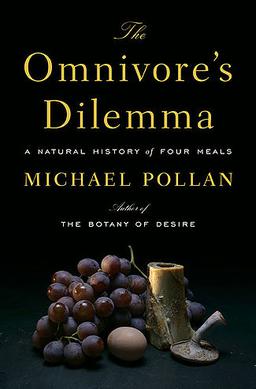
The Omnivore's Dilemma isn't actually a gardening book. However, it is the first book that truly interested me in where my food comes from. Through an enticing narrative following four meals Micheal Pollan examines the ecological consequences of our food production system in America. He goes over the industrialized system and its problems then details alternatives. It was this book that made me want to make ecologically conscious decisions in the supermarket. Later on, it was also this book that helped me decide that I was okay with breeding and slaughtering my own animals.


Gaia's Garden is an extremely obtainable guide on how to do what I want to do.  If the Omnivore's Dilemma piqued my interest and inspired me, than Gaia's garden gave me the tools.  It's very clear,
and explains the science behind it's instructions.  If you garden at all I recommend you look at this book. The common sense methods will help anyone produce more food, or conserve more resources. It was after reading Gaia's Garden that I started to form my plans for the future, although my ideas were more modest in the beginning

These two books are ones that I currently own.   The next two are still on my to-buy list, although I have read both thanks to my school's library*.


This two volume set is the most expensive on the list, topping out at nearly ninety dollars at the time of this writing.  It goes over the same material as Gaia's garden but in a more detailed and scientific manner.  Its perfect logic and thorough explanations have kinda of ruined me for other, plainer gardening books.  In comparison to Edible Forest Gardens those other books leave me without any proper scientific explanations.  These books bother to answer my questions, which is something I have come to appreciate in a book. This set is closer to a college level of reading, the books certainly heft like textbooks, but worthy of a try if sustainability is something that you are interested in.  I know that when Josh and I get land it will be edible forest gardens that will be my primary guide.


Breed Your Own Vegetable Varieties  is simply fantastic.  It's scientific, but still passionate. Carol Deppe  thoughtfully goes over how to breed vegetables, whether you have a specific goal in mind or simply want to save your own seed without your varieties falling apart after a couple generations.   Every gardener that saves seed is breeding their own varieties of vegetables,  Deepe simply shows us how to do it intentionally.   Her passion and conviction has inspired me, and I want to garden intentionally and thoughtfully.  I even have a couple ideas for breeding projects, but they'll have to wait until I can successfully make it past the first generation.


This is a reality TV Series where historians and archaeologist live on a historically accurate victorian age farm.  This is about gardening, but clearly not a book.  It gets a honory spot on my list because while I was reading and pondering food related plans my husband wasn't too certain about some of the weirder aspects.  It was while watching this documentary that he got excited about keeping chicken and bees, and even suggested keeping sheep as well. This series makes me long for the future when I can try some of these things out for myself. It's really well done and extremely interesting. I suggest taking a look.

I often feel like I am not explaining my reasons behind my plans and experiments properly.  I hope to get better at this, but in the meantime take a look at these fantastic sources. They certainly do a better job than I am.

* I will be incredibly sad to leave BYU, but only because of this library.


Sunday, April 27, 2014

New Experiments In Gardening

As you may recall last year I tried to tweak the three-sister's guild of plants into something that I would actually enjoy eating.  It was a little less than successful, but I think the concept is still sound.   I did learn a few important things about gardening though. One lesson was, "don't dig the soil when it's wet, or else it will turn into cement and all your plants will die". Another important lesson I learned was "don't buy cheap starts late into the season, they will suck and half of them will die."*

I want to be good at gardening,  hopefully a couple rather obvious insights a year will help me to be passable by the time I'm a grandmother.

Josh and I weren't exactly sure if we'd still be in provo over the summer, so I didn't sign up for the community garden this year. I also don't really plan on having a lot of time on my hands this summer **.  At first I didn't plan on having a garden at all, but a couple days ago I realized that having plants is important to me.

So here I am,  a little too late to start seeds, no money budgeted for this project and a hair-brained scheme which may or may not fail based on my lack of experience alone.  My poor husband is left trying to balance encouraging me and cautioning me not set myself up for failure.

To be fair, he puts me in the same position at least as often.

Before I fill you in on my experiment let me give you some background information.

Straw bale gardening is a method where you fertilize a bale of straw, allow it to decompose for a few weeks, and then plant directly into it.  This way the bale serves as both planting medium and container.  The straw decomposes over the season and all your plants benefit from the releasing nutrients.  It's suppose to be equally effective on the earth or on the concrete of somebody's balcony.

This method is appealing because of it's apparent ease, however, it does have some drawbacks.  First, to fertilize a straw bale organically (with bone and blood meal) would be prohibitively expensive. Second, as the season wears on a decomposing straw bale becomes butt ugly.  This second thing is only a problem because I care too much about appearances. If I were to try this method out this season, I would just stick the bales in a container.

Sheet mulching is a a way of preparing a garden bed with very little effort.   You essentially pile on the components of a compost pile in layers and then let worms, micro-organisms and fungi do the rest.  You can plant immediately,  but the bed is most fertile the second year onwards.

Both of these methods deal with planting in undigested compost,  so I'm going to take that theme and run with it.  At first I thought I would just do the straw bale method, except that I would stick it in a container. Then it occurred  to me that I wouldn't need to keep the bale intact, and so I could use other sources of nutrients besides the blood and bone meal.

I plan on layering alternating layers of nitrogen and carbon rich materials in a container  and then planting directly into it.  So, basically sheet mulching in a container. I plan on using straw as my main carbon rich material because, according to the book on the straw bale method, it's suppose to remain light and fluffy throughout the season.

I'm most worried about my plants becoming water-logged by all of the organic matter.  Just because either parent method doesn't have a problem with root rot doesn't mean it wont be a problem in a container.***

In the interest of pretending that this is a scientific endeavor here is a hypothesis for the season: Sheet mulching in a container is an effective and affordable means of gardening. In fact, it's awesome.  All of my plants survive and I suddenly become a gardening goddess.

On my balcony I'm going to try and grow: strawberries, cantaloupe, sugar snap peas, scarlet runner beans, and a couple different flowers.  I started seeds today.

I really want to make this container for both the strawberries and the cantaloupe. Unfortunately that's dependent upon me finding free wooden pallets.   I would try and construct them from regular ol' lumber, but I'm trying to do this on the cheap. 

Go here for instructions

I have less-ideal plastic crates that I can reuse anyways.

In other news, I have a couple friends who offered to let me come play in their garden this summer.  So it looks like I'll get some "normal" gardening experience this year as well.  I'm really excited, and I hope it all works out. 

It's good to have a scheme again.


*These two might actually be confounding variables
**I had a baby, I may tell you about it later
*** containers suck that way.